


|
             
|

|



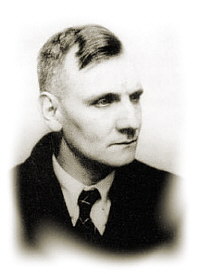
He described how the Jews were forced to undress, the piles of shoes were allegedly 25 meters high, the women's hair was cut off, the naked Jews were driven between two barbed wire fences to the gas chambers.
After the war he wrote down his evidence on May 26, 1945:
"In
January, 1942, I was named chief of the Waffen SS technical disinfection
services, including a section for extremely toxic gasses.
One day SS-Sturmbannhfuhrer Gunther of the RSHA came into my office,
dressed in civilian clothing. I did not know him. He ordered me to get him
100 kilos of prussic acid and to go with him to a place known only to the
truck driver. When the truck was loaded, we led for Lublin (Poland). We
took along Dr. Pfannenstiel, occupant of the chair of hygiene at the
University of Marburg.
SS Gruppenfuhrer Globocnick was waiting for us at Lublin. He told us,
'This is one of the most secret matters there are, even the most secret.
Anybody who talks about it will be shot immediately.'
He explained to us that there were three installations:
1) Belzec, on the Lublin-Lwow road. A maximum of 15,000 people per day.
2) Sobibor (I don't know exactly where it is), 20,000 people a day.
3) Treblinka, 120 kilometers NNE of Warsaw
4) Maidanek, near Lublin (under construction).
Globocnick said: 'You will have to disinfect large piles of clothing
coming from Jews, Poles, Czechs, etc. Your other duty will be to improve
the workings of our gas chambers, which operate on the exhaust from a
Diesel engine. We need a more toxic and faster working gas, something like
prussic acid. The Fuehrer and Himmler - they were here the day before
yesterday, August 15 - ordered me to accompany anybody who has to see the
installation.'
Professor Pfannenstiel asked him: 'But what does the Fuhrer say?'
Globocnick answered: 'The Fuhrer has ordered more speed. Dr. Herbert
Lindner, who was here yesterday, asked me, 'Wouldn't it be more prudent to
burn the bodies instead of burying them? Another generation might take a
different view of these things.' I answered: 'Gentlemen, if there is ever
a generation after us so cowardly, so soft, that it would not understand
our work as good and necessary, then, gentlemen, National Socialism will
have been for nothing. On the contrary, we should bury bronze tablets
saying that it was we, we who had the courage to carry out this gigantic
task!' Then the Fuhrer said: 'Yes, my brave Globocnick, you are quite
right.''
The next day we left for Belzec. Globocnick introduced me to SS [Wirth?]
who took me around the plant. We saw no dead bodies that day, but a
pestilential odor hung over the whole area.
Alongside the station there was a 'dressing' hut with a window for
'valuables.' Further on, a room with a hundred chairs, [designated as]
'the barber.' Then a corridor 150 meters long in the open air, barbed wire
on both sides, with signs: 'To the baths and inhalants.' In front of us a
building like a bath house; to the left and right, large concrete pots of
geraniums or other flowers. On the rood, the Star of David. On the
building a sign: 'Heckenholt Foundation.'
The following morning, a little before seven there was an announcement:
'The first train will arrive in ten minutes!' A few minutes later a train
arrived from Lemberg: 45 cars with more than 6,000 people, Two hundred
Ukrainians assigned to this work flung open the doors and drove the Jews
out of the cars with leather whips.

A loud speaker gave instructions: 'Strip, even artificial limbs and
glasses. Hand all money and valuables in at the 'valuables window.' Women
and young girls are to have their hair cut in the 'barber's hut.'' (An SS
Unterfuehrer told me: 'From that they make something special for submarine
crews.')
Then the march began. Barbed wire on both sides, in the rear two dozen
Ukrainians with rifles. They drew near. Wirth and I found ourselves in
front of the death chambers. Stark naked men, women, children, and
cripples passed by.
A tall SS man in the corner called to the unfortunates in a loun
minister's voice: 'Nothing is going to hurt you! Just breathe deep and it
will strengthen your lungs. It's a way to prevent contagious diseases.
It's a good disinfectant!'
They asked him what was going to happen and he answered: 'The men will
have to work, build houses and streets. The women won't have to do that,
they will be busy with the housework and the kitchen.'

This was the last hope for some of these poor people, enough to make them
march toward the death chambers without resistance. The majority knew
everything; the smell betrayed it!
They climbed a little wooden stairs and entered the death chambers, most
of them silently, pushed by those behind them. A Jewess of about forty
with eyes like fire cursed the murderers; she disappeared into the gas
chambers after being struck several times by Captain Wirth's whip.
Many prayed; others asked" 'Who will give us the water before we
die?' [A Jewish rite] SS men pushed the men into the chambers. 'Fill it
up,' Wirth ordered; 700-800 people in 93 square meters. The doors closed.
Then I understood the reason for the 'Heckenholt' sign. Heckenholt was the
driver of the Diesel, whose exhaust was to kill these poor unfortunates.
SS Unterscharfuehrer Heckenholt tried to start the motor.
It wouldn't start! Captain Wirth came up. You could see he was afriad
because I was there to see the disaster. Yes, I saw everyting and waited.
My stopwatch clocked it all: 50 minutes, 70 minutes, and the Diesel still
would not start!
The men were waiting in the gas chambers. You could hear them weeping 'as
though in a synagogue,' said Professor Pfannenstiel, his eyes glued to the
window in the wooden door.
Captain Wirth, furious, struck with his whip the Ukrainians who helped
Heckenholt. The Diesel started up after 2 hours and 49 minutes, by my
stopwatch. Twenty-five minutes passed. You could see through the window
that many were already dead, for an electric light illuminated the
interior of the room. All were dead after thirty-two minutes!
Jewish workers on the other side opened the wooden doors. They had been
promised their lives in return for doing this horrible work, plus a small
percentage of the money and valuables collected.
The men were still standing, like columns of stone, with no room to fall
or lean. Even in death you could tell the families, all holding hands. It
was difficult to separate them while emptying the rooms for the next
batch.
The bodies were tossed out, blue, wet with seat and urine, the legs
smeared with excrement and menstual blood.
Two dozen workers were busy checking mouths which they opened with iron
hooks. 'Gold to the left, no gold to the right.' Others checked anus and
genitals, looking for money, diamonds, gold, etc. Dentists knocked out
gold teeth, bridges, and crowns, with ahmmers.
Captain Wirth stood in the middle of them. He was in his element, and,
showing me a big jam box filled with teeth, said, 'See the wieght of the
gold! Just from yesterday and the day before! You can't imagine what we
find every day, dollars, diamonds, gold! You'll see!' He took me over to a
jeweler who was responsible for all the valuables.
They also pointed out to me one of the heads of the big Berlin store
Kaufhaus des Westens, and a little man whom they forced to play the
violin, the chiefs of the Jewish workers' commandos. 'He is a captain of
the Imperial Austrian Army, Chevalier of the German Iron Cross,' Wirth
told me.
Then the bodies were thrown into big ditches near the gas chambers, about
100 by 20 by 12 meters. After a few days the bodies welled and the whole
mass rose up 2-3 years because of the gas in the bodies. When the swelling
went down several days later, the bodies matted down again.
They told me that later they poured Diesel oil over the bodies and burned
them on railroad ties to make them disappear."
On April 22, 1945, near the end of the war, Kurt Gerstein surrendered to the French, who arrested him as an alleged war criminal. They took him to the Cherche-Midi Military Prison on July 5, 1945. Twenty days later, Gerstein was found dead in his cell. Whether he committed suicide out of despair and guilt in not being able to stop the Holocaust or whether he was murdered by other SS officers in the prison remains a mystery.

|
|

|


www.deathcamps.info Louis Bülow Privacy. ©2004-06.